
Newsletter Edition #391 [The Curated Primer]
Readers,
In this edition we bring together the last three months of our reporting on all things Global Health in Geneva.
You will find below links to three dozen long-form editions published since July through September 2026. My colleague Sana Ali has compiled this for you.
Our core expertise and one of the key offerings this year, have been related to global health negotiations at the WHO. There is substantial demand from our readers on how countries are negotiating the first ever Pathogen Access Benefits Sharing rules in global health. And we understand that. These negotiations go beyond Pandemic Prevention, Preparedness and Response, and go to the heart of structural and political underpinnings of the field.
Apart from the negotiations, that take up a lot of our time, resources and energies, we also turned up with the bread-and-butter reporting on global health. These include our Files In-Depth editions, covering a wide spread of topics including the Ebola outbreak, the WHO DG elections race, reforms in the sector, and wider geopolitics. Yes, we broke the story on China's nomination for the DG race. (I am not generally competitive, but hey, we are also not passive bystanders in the dog-eat-dog media scene.)
Last quarter, our annual fellows served up impressive analyses with deep dives on mental health, the Global Fund elections, and on the significance of the HIV preventive drug Lenacapavir.
In addition, we brought you a string of guest essays that were timely, and added to our already rich offerings. From the geoeconomics in global health; to diabetes care; and a comprehensive essay on the required expertise and qualifications to run the WHO.
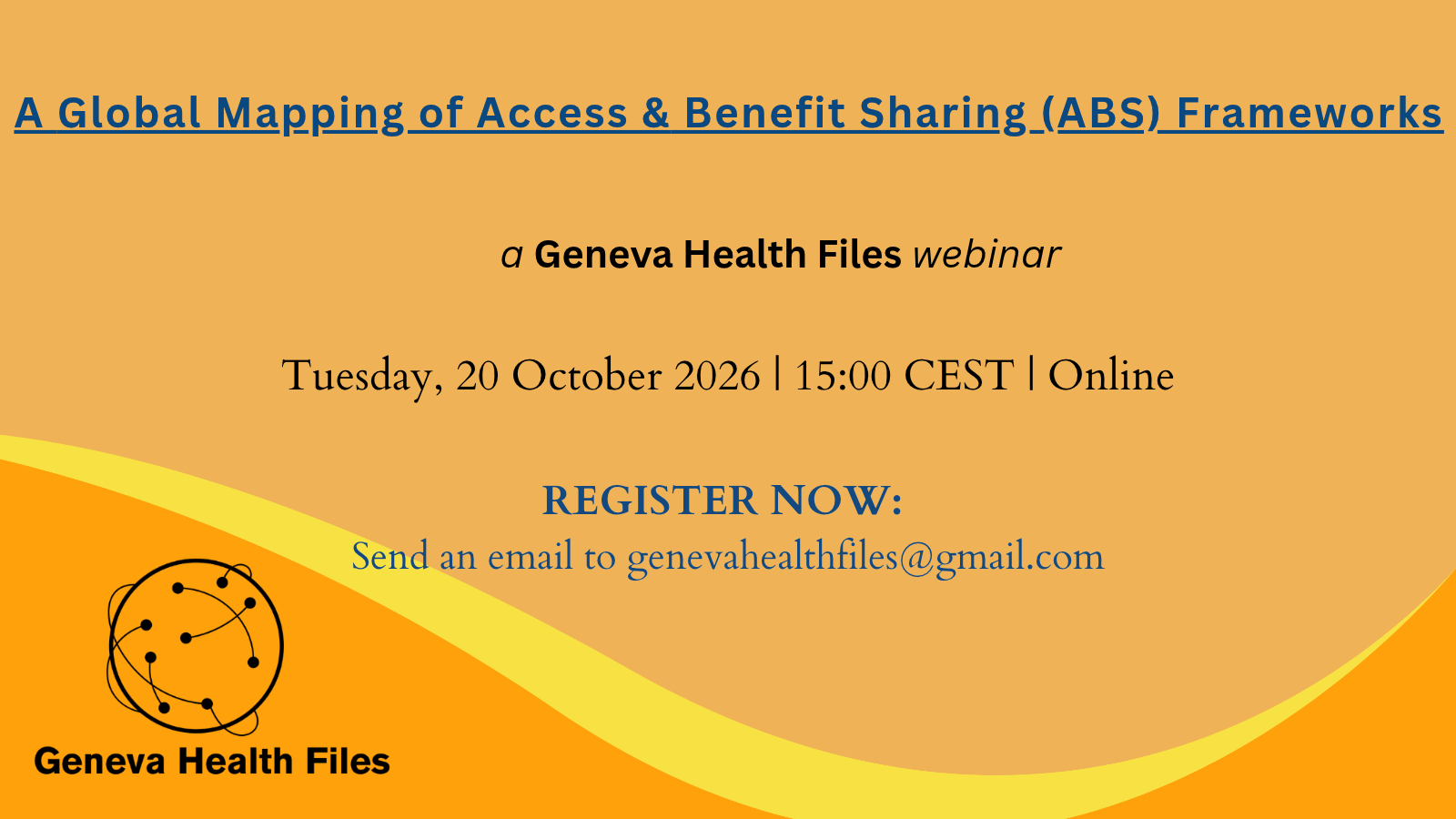
Finally, we had an exclusive offering from GHF Plus - our premium product for core supporters, on the global mapping of access and benefit sharing frameworks. (See below on webinar on this tomorrow!).
In addition, we also brought you curated editions, and our Jobs Scanners (find below).
I was assisted by our contributors in bringing these stories to you. I treasured working with Anjan Rosario, Shubhangi Thakur, Merlin Ince, Pia Mehdwan, Anne Jomard, and Nishant Sirohi on some of these editions. My colleague Julia Dötzer, turned up her magic with infographics, charts, and fine-tuning the nuts and bolts of our business operations.
We hope you find this edition useful.
Chasing the tail end of 2026, we are keeping up with the on-going negotiations, the election-frenzy at the WHO, the reforms discussion in global health, and we will also be taking a closer look at some of the big global health agencies.
With every edition we strive to offer value with depth, nuance, detail, capturing the technical and the political, and giving our readers context. You are experts in global health, and we work hard to inform you with news you can use. Consider becoming a subscriber, it helps us absorb the costs of reporting and production.
Tracking global health policy-making in Geneva is tough and expensive, without institutional support. For six years, we have provided you with the information and tools that directly contribute to your work in the field. We rely on our readers who respect and recognize the value of reader-funded journalism.
By becoming a paying subscriber you make our work possible. Our subscribers contribute towards greater accountability in global health.
Best,
Priti
Priti Patnaik, Founder & Publisher, Geneva Health Files
Feel free to write to us: genevahealthfiles@gmail.com ; Find us on BlueSky, Instagram and Linkedin.

I. GHF WRAP Q3 2026
Compiled by Sana Ali
Treaty talks
[Sep 21] Sovereign Control Over Pathogen Information: The Design Crux of The Pathogen Access Benefit Sharing System at The WHO
Reaching an agreement on the Pathogen Access Benefit Sharing System (PABS), continues to be daunting for WHO member states for a host of reasons, some procedural, some political, but most of all: a current lack of a common vision on the design of the mechanism. The 8th meeting of the Intergovernmental Working Group set up to negotiate the PABS mechanism (an annex to the Pandemic Agreement), unfolded with insufficient progress and persistent divergences in positions, diplomats said.
[Sep 15] Positions Taut, Bureau Half-Filled: PABS Talks resume at the WHO
WHO member states are meeting this week in Geneva to continue negotiations on the Pathogen Access and Benefit Sharing System in the midst of some challenges: positions between countries on conceptual matters continue to be distant; and concerns on process persist.
[Sep 09] The View from Brussels: European Parliamentarians on the Pathogen Access Benefit Sharing (PABS) System; PABS Primer
European Union negotiator, Americo Beviglia Zampetti, outlined the scope of the WHO Pandemic Agreement's Pathogen Access and Benefit Sharing (PABS) Annex, during a meeting of the Committee on Public Health at the European Parliament on September 7, 2026. We distilled some of these interventions for you in a lightly edited transcript of the comments and responses made by negotiator Zampetti.
[July 20] Africa Group Vs The EU. Competing Models For The Pathogen Access Benefit Sharing System
The Intergovernmental Working Group set up to negotiate the PABS mechanism, reviewed two models this week, on how such a system can be structured. It appears to have revitalised these technical negotiations to a small extent. The models, each proposed by developed and developing countries separately, do not have much in common, and run on different assumptions and scale. And yet, in their differences, they may provide fuel towards these negotiations.
[July 08] Binding Benefits, Open Data and Innovation: PABS Fault Lines Return, Positions Fierce as Negotiations Resume
Negotiators returned to Geneva this week with more time to negotiate the Pathogen Access and Benefit-Sharing (PABS), but with many of the political and legal divisions still intact. The PABS annex is a critical part of the WHO Pandemic Agreement.
[July 06] How a Live Debate on the Sharing & the Access to Pathogen Information Could Affect Negotiations Over a Rules-Based System at the WHO
On 17 May 2026, WHO declared a Public Health Emergency of International Concern in response to an outbreak of Bundibugyo ebolavirus in the Democratic Republic of the Congo and Uganda. It was the seventeenth time DRC had faced Ebola, but only the second outbreak ever caused by the Bundibugyo strain, a virus for which no licensed vaccine or treatment exists. The following day, the Africa CDC declared a public health emergency of continental security.
[July 03] PABS Primer: The State of Play for the July Negotiations at The WHO
In this edition, we bring you a quick primer ahead of the forthcoming negotiations on the Pathogen Access Benefits Sharing system at the WHO in Geneva next week. In addition, you will also find views of some negotiators as articulated at a recent discussion on the PABS system. We believe these offer indications on how delegations are thinking about conceptual, and tricky issues in these negotiations.
The Files In-Depth
[Oct 06] Three Questions the Bundibugyo Ebola Outbreak Asks of CEPI’s 100 Days Mission
Ramping up investments, and scurrying for countermeasures in the midst of an expanding health emergency was never going be easy. It was not supposed to be this way. An array of complex factors have meant that the international community and local actors have not been able to act fast enough to keep pace with the ongoing Ebola outbreak in the Democratic Republic of the Congo - the 17th such outbreak on the record. In this story, we take a closer look at the 100-day mission that aims to have vaccines ready for initial authorisation and manufacturing at scale within 100 days of a threat being identified. The current outbreak raises at least three questions.
[Aug 25] In & Out At the WHO: Nominations for the Next Director-General; Departure of Two Top Officials
Countries are going to elect a new leader at the World Health Organization in May 2027. The institution is already under transition for all practical purposes. The last few weeks have seen a few nominations for the role of the next Director-General.
[Aug 31] People, Process, Politics: The Election of the Director-General of The World Health Organization
Global Public Health is a universal concern. As the leading and coordinating authority on health, the World Health Organization and its member states, embody this responsibility. The election for who leads the WHO is, therefore a significant process.
Locate this role in the reality of today: restructured, shrunk, and edged out by well-funded actors, and a political climate stacked against it, the institution is at cross-roads not unlike in the past.
Analysis from GHF Summer Fellows
[Oct 2] Equal Votes, Unequal Voice? The Global Fund's Leadership Test
Weeks from now in October 2026, the Global Fund's Board will meet in Geneva to choose the institution's next Executive Director. The leadership transition at the Fund occurs at a time when global health financing has essentially been reset on account of drastic budget cuts that are estimated to have claimed more than 750 000 lives across 93 countries.
[Sep 07] The Illustrative Case of Lenacapavir: The Gatekeepers of Prevention, Access & Financing
Few medicines in global health have arrived with as much promise, and as much unresolved debate about access, as lenacapavir, a preventive drug to treat the infection caused by Human Immunodeficiency Virus (HIV).
Developed by Gilead, lenacapavir (LEN) is the first HIV capsid inhibitor to be used for prevention. It is administered as a subcutaneous injection every six months, reducing the need for daily pills and frequent clinic visits. (It works as an antiviral that targets HIV’s protective shell and stops the virus from copying itself and multiplying.)
[Aug 31] The GLP-1 Patent Split: A Contrast of How Major Markets Deal With The Loss of Exclusivity
When India's patent on semaglutide expired in March 2026, more than 50 generic versions were ready to launch. In the United States, patients will wait until at least 2031. Within days of GLP-1 agonists — drugs that mimic a gut hormone controlling appetite and blood sugar — patent expiry, Indian pharmaceutical companies including Dr. Reddy's Laboratories, Sun Pharma and Zydus Lifesciences had introduced their own versions of semaglutide — the active ingredient in Novo Nordisk's Ozempic and Wegovy, and the world's second-best-selling prescription medicine — in what analysts have described as one of the fastest generic rollouts in recent pharmaceutical history.
[Aug 4] The Achievement and Reckoning of Spain’s Feminist Health Agenda
Pedro Sánchez has clearly articulated the politics of his government. It is feminist. His opponents call it an existential threat, claiming it erodes the foundations of society. What Spain is building tells a different story.
[July 26] Beyond the Ban: Can Social Media Restrictions Protect Youth Mental Health?
Australia’s move to restrict young people’s access to social media reflects a growing global push to address digital harms. Similar debates are unfolding across Europe, the United Kingdom, and parts of the United States, where policymakers increasingly frame social media as a public health risk. But as regulation tightens and courts begin holding technology companies to account across jurisdictions, a central question remains: can restricting access meaningfully improve youth mental health?
The Files Brief
[Sep 26] Spain Fields Health & Climate Champion in the Race to Lead WHO, Will Compete with Candidates from Petro Economies; The WHO DG Elections Tracker
Spain, a rising leader in global health, has nominated health and climate champion María P. Neira, as a candidate to become the next Director-General of the WHO. She joins a formidable pool of four other declared candidates, to run for the highest office in global health. (Nominations from other regions are not yet ruled out, and are yet to be public.)
[Sep 14] EXCLUSIVE: Spain's Push For Radical Reform of Pharma R&D: Bulk Procurement For An Aggregated Market
Spain wants to overhaul Europe's pharmaceutical R&D model with a plan for EU countries to club together to secure access to new drugs.A plan to amend the European Commission's proposed EU Biotech Act, circulated among EU capitals on September 10 and obtained by Geneva Health Files, would markedly expand the use of joint procurement for medicines.
[Aug 21] Ebola Outbreak Could Be Three Times Larger With More Than 10,000 Cases According To Epidemiological Models: Africa CDC
The second IHR Emergency Committee meeting on the Bundibugyo virus disease epidemic in the DRC was held this week. Official communication from the meeting is awaited. WHO has already said, that the Ebola outbreak remains a public health emergency of international concern as per advice of the committee.
[Aug 14] Update: 2000+ deaths, 4000+ cases; Unknown Chains of Transmission In The Fastest Growing Ebola Outbreak
From clinical trials, diagnostics, to financing and implementation; from strategies on contact tracing to active case-finding; from community engagement to challenges of delivery in conflict settings; this edition maps responses from global and regional authorities on this fast moving outbreak as it throws up countless indications for policy measures and legal obligations being discussed in Geneva.
[Aug 11] Ebola Outbreak is Expanding Beyond the Capacity of the Response to Manage: WHO
In this quick edition we bring you updates on the Ebola outbreak from the WHO, Africa CDC and the U.S. government. These were communicated to the press in recent days.
[Aug 4] At the UN’s First Global Dialogue, Health Emerges as Both a Promise and a Warning
When the United Nations convened its first-ever Global Dialogue on AI Governance in Geneva on 6-7 July, the official agenda was broad: opportunities, capacity gaps, safety, and human rights. Health was rarely the official headline. But it ran through nearly every session, as a genuine success story and as a warning about who gets left out. Most importantly, how far AI has already outrun the oversight built to govern it.
[July 10] Resources to Fight Ebola Trickle In Slowly, Even as Funding is Earmarked: Authorities
In this edition we bring you a quick update from the weekly presser of the Africa CDC on the Ebola outbreak. The WHO also had a briefing for countries this week on the emergency. We present information from these briefings below.
The Files Flash
[Oct 6] China Throws Hat Into The Ring, Wants to Lead The World Health Organization Again
China has reportedly been weighing a decision to nominate a candidate for the Director-General of the WHO, according to academics and experts familiar with these discussions. Our queries to Chinese authorities were not answered by the time this story went to print. A source familiar with these considerations told us that while no decision had been made yet, the government was weighing fielding a candidate. The nominations process closes tomorrow, September 24, 2026
[Sep 23] Is China weighing a nomination to lead the World Health Organization?
China has reportedly been weighing a decision to nominate a candidate for the Director-General of the WHO, according to academics and experts familiar with these discussions. Our queries to Chinese authorities were not answered by the time this story went to print. A source familiar with these considerations told us that while no decision had been made yet, the government was weighing fielding a candidate.
GUEST ESSAYS
[Sep 22] WHO’s Next DG Should Be A Medical Doctor, Public Health Leader & Health-Systems Expert
The 2027 election of the WHO Director-General comes at a critical moment for national, regional and global public health coordinated structures, competent work force and systems. Member States should look beyond political representation, diplomatic credentials and administrative experience. Countries should prioritise a senior dynamic public health professional leader who understands medical and health service delivery from the people and community, patient and primary health care to the district and national and international health systems.
[Sep 04] The Geoeconomic Turn in Global Health: Pathogen Access & Benefit Sharing As a Chokepoint
Two dates should be at the forefront of global health strategists this September: on 14 September the Intergovernmental Working Group returns to Geneva for its eighth round, resuming the attempt to finish the Pathogen Access and Benefit-Sharing annex that is the last lock on the door of the Pandemic Agreement.
[Aug 18] End The Global Double Standards in Diabetes Care
For people living with type 1 diabetes – when your body can no longer produce insulin – access to daily insulin treatment is essential to stay healthy, and alive. Yet despite insulin being indispensable, the quality of treatment people receive still depends largely on where they live and what they can afford.
GHF Plus: Global Health Policy Intelligence
[Oct 2] A Global Mapping of Access and Benefit Sharing (ABS) Frameworks
This database provides a comparative assessment of 201 countries and jurisdictions on existence, scope, and key characteristics of their Access and Benefit Sharing (ABS) frameworks, with a particular focus on provisions relevant to genetic resources, microorganisms, traditional knowledge, Digital Sequence Information (DSI), access requirements, benefit sharing, compliance mechanisms, and legal sanctions.
 Priti Patnaik

II. GHF WEBINAR
III. GHF JOBS SCANNER
Senior
· WHO: Call for experts: Technical Advisory Group on Artificial Intelligence for Health (TAG-AI)
Placement: Abu Dhabi
Application Deadline: NA
· Global Antibiotic R&D Partnership (GARDP): Associate Director SBI Portfolio:
Placement: Geneva/Hybrid
Application Deadline: 31st of October 2026
Mid
· IOM UN Migration: Programme Officer (Health Assessment Programme (HAP)) (P)
Placement: Geneva
Application Deadline: 22nd of October 2026
· ICRC: Health Delegate Placement: mobile
Application Deadline: 25th of October 2026
· WHO: NPO (Public Health and Environment)
Placement: New Delhi
Application Deadline: 29th of October 2026
Junior
· PATH: Senior Program Assistant, Primary Health Care
Placement: Geneva
Application Deadline: 19th of October 2026
· CBM: Programme Officer
Placement: Pakistan
Application Deadline: NA
Global health is everybody’s business. Help us probe the dynamics where science and politics interface with interests. Support investigative global health journalism.
 Priti Patnaik


