![[GUEST ESSAY] When Alcohol Disappears From Accountability on Non-Communicable Diseases, Prevention Loses [EB158 WHO]](/content/images/size/w1280/format/webp/substack-post-media-s3-amazonaws-com/public/images/76e70ede-eb1b-4162-bc23-c9048136a26f_3840x2160.jpg)
Hi,
Process determines outcomes. And omissions can be glaring.
In this edition, we bring you a guest essay from activist groups working on addressing non-communicable diseases, focusing on alcohol as a risk factor.
In the on-going meeting of the WHO Executive Board, author of the essay, Maik Dünnbier, examines what the omission of alcohol from a report to the Board, means for the fight against NCDs, what it reveals about governance and recounts the impact of alcohol use on public health. Such omissions convey more than meets the eye.
Dünnbier reminds us that “during the UN High-Level Meeting process, alcohol policy language was systematically attacked, diluted, and partially removed due to alcohol industry interference. When the follow-up report then excludes alcohol entirely, it compounds this pattern and signals that alcohol is the one major NCD risk factor that can be sidelined.” He calls for future reporting to track alcohol policy implementation for the achievement of NCD goals.
We hope you find this edition useful and timely.
Support public interest global health journalism, become a paying subscriber. Tracking global health policy-making in Geneva is tough and expensive. Help us raise important questions, and in keeping an ear to the ground. makes this possible.
Gratitude to our subscribers who help us contribute to greater accountability in global health.
Watch out for more updates from us this week.
Best,
Priti
Feel free to write to us: genevahealthfiles@gmail.com; Find us on BlueSky: https://bsky.app/profile/genevahealthfiles.bsky.social

I. UPDATE EB158: GUEST ESSAY
When Alcohol Disappears From Accountability on Non-Communicable Diseases, Prevention Loses
By Maik Dünnbier
Dünnbier is Director of Strategy and Advocacy at Movendi International, a global social movement of 140+ civil society organisations from 50+ countries working to advance alcohol policy to achieve health and development for all. Email: maik.duennbier@movendi.ngo
For most people, preventing avoidable disease is a shared priority. Governments commit to promoting healthy years of life, strengthening health systems, and protecting communities from preventable harm. That is why follow-up and accountability matter: what gets tracked gets acted on, and what is omitted risks falling behind.
Against this backdrop, the recent WHO Executive Board discussion of the Director General’s report on follow-up to the UN High-Level Meeting on noncommunicable diseases (NCDs) and mental health (agenda item 6) raises a serious concern. While welcoming the Political Declaration of the High-Level Meeting and establishing annual reporting through 2031, the report makes no mention of alcohol at all. Alcohol is neither mentioned as major NCDs risk factor even though the Political Declaration does nor is alcohol policy mentioned as key solution to tackle the NCDs burden.
In a document explicitly about implementation, acceleration, and accountability, that omission is deeply concerning. The omission of alcohol contradicts both the political declaration as well as the reality countries face with rising cancer cases and deaths due to alcohol. In some regions, alcohol’s contribution to NCDs is skyrocketing.
Member States Are Clear
In previous WHO governing body meetings, member states discussed under which agenda item the Secretariat should report on alcohol and the implementation of the Global Alcohol Action Plan. Member States rejected a suggestion to do the reporting under mental health agenda items because that would have limited the scope of alcohol harm that could meaningfully fit into the discussions. Member States were keen to continue discussing alcohol issues under the NCDs agenda item.
Also during the discussions of item 6. Many member states addressed alcohol as NCDs risk factor, spoke about commercial determinants of NCDs, and raised the importance of alcohol policy.
For example, Belgium, Estonia, Finland, Iceland, Ireland, Latvia, The Netherlands, Portugal and Slovenia delivered a statement expressing “our countries remain deeply concerned by the persistent health burden of alcohol consumption” and reiterating their “support for … effective alcohol-control policies…”. In addition, a diverse set of countries such as Nepal, Spain, Chile, Ecuador, and Ireland made clear with their statements that alcohol harm and policy belongs into the NCDs agenda.
A Governance Signal That Matters
The report highlights a small set of “fast-track” priorities and frames what will be monitored most closely in the coming years. That framing sends a clear signal to Member States about what WHO considers headline action areas. By excluding alcohol entirely, the report implicitly normalises the political sidelining of alcohol policy – despite alcohol being one of the major, preventable drivers of NCDs and a key commercial determinant of avoidable harm.
For instance, out of the more than 2.6 million annual deaths due to alcohol, 1.6 million are NCDs related. Meaning that more than 60% of alcohol-attributable deaths worldwide are from noncommunicable diseases, according to the WHO Global Alcohol Status Report from 2024. Alcohol accounted for 115.9 million DALYs in 2019 (about 4.6% of all DALYs), showing that alcohol remains a large “structural” driver of lost healthy life – despite modest improvements over the previous decade.
This matters because alcohol policy is clearly not a marginal issue. Alcohol is one of the four major NCD risk factors recognised by World Health Organization and a leading commercial driver of preventable NCD harm globally. Alcohol contributes substantially to cancers, cardiovascular diseases, and digestive diseases, and accounts for a significant share of NCD deaths and disability worldwide.
According to WHO data, in 2019, alcohol caused:
· More than 400,000 cancer deaths,
· More than 470,000 cardiovascular disease deaths,
· More than 570,000 digestive disease deaths, and
· 156,000 deaths due alcohol use disorder.
In many regions – including Europe, Africa, the Caribbean, and parts of the Western Pacific – most alcohol-attributable deaths are from NCDs, not injuries.
WHO evidence shows that alcohol is a major contributor to the global NCD burden.
· Alcohol causes at least seven types of cancer – including breast, liver, colorectal, and oesophageal cancers.
· Alcohol causes cardiovascular diseases such as hypertension, stroke, and ischemic heart disease.
· It is also a leading driver of chronic liver disease and pancreatitis.
· In the European Union, the majority of alcohol-attributable deaths are from cancers, cardiovascular, and digestive diseases.
· In the African and the Caribbean regions, alcohol fuels rising NCD mortality.
· Across regions, the burden falls disproportionately on younger and working-age adults, undermining development and widening health inequalities.
Omitting alcohol from follow-up framing weakens the credibility, equity, and effectiveness of NCD accountability as a whole.
Does This Omission Signal A Pattern or An Accident?
The shocking omission does not occur in isolation. During the High-Level Meeting process, alcohol policy language was systematically attacked, deleted, and partially reinserted in diluted form across successive drafts of the Political Declaration. Movendi International tracked those alcohol industry attacks and Reuters reported on the story in September 2025.
Clear commitments on alcohol taxation were watered down. References to proven WHO alcohol policy solutions were diluted. Safeguards against alcohol industry interference were not named with the same clarity applied to tobacco.
The final declaration does include alcohol – but without the specificity and accountability mechanisms applied elsewhere. When the Secretariat’s follow-up report then omits alcohol altogether, it compounds the same pattern at WHO governance level. Alcohol becomes an even more increased risk factor that can be dropped without explanation, while others receive urgency and structure.
A Triple Coherence Gap
This omission creates a triple coherence gap.
First, it is inconsistent with the Political Declaration itself, which – despite its shortcomings – does include commitments on alcohol taxation, regulation of availability and marketing, health literacy, and mental health service responses.
Second, it contradicts the Global Alcohol Action Plan 2022–2030, adopted unanimously by the World Health Assembly. That plan explicitly links alcohol policy to NCD prevention, calls for accelerated implementation of high-impact measures, and aligns alcohol policy action with SDG target 3.4 on reducing premature NCD mortality.
Third, it runs counter to WHO’s own evidence base. WHO investment cases and economic analyses show that alcohol policy Best Buys – taxation, advertising bans, and placing common-sense limits on alcohol availability – are among the most cost-effective interventions in public health, delivering the second-highest return on investment among all NCD Best Buys.
Ignoring alcohol in follow-up reporting means sidelining one of the strongest levers governments have to prevent NCDs, reduce health inequalities, and strengthen public finances.
This episode also exposes a wider accountability problem in WHO reporting. Progress on the Global Alcohol Action Plan appears only superficially under mental health, while alcohol is absent from agenda items on noncommunicable diseases, tuberculosis, indigenous peoples’ health, and other priority areas where alcohol is a well-documented risk factor. This fragmentation obscures alcohol’s cross-cutting role across health outcomes and weakens implementation of WHO-endorsed solutions. If the Global Alcohol Action Plan is to deliver, its progress must be reported coherently across relevant health agendas. These gaps cannot persist if WHO is to uphold evidence-based, integrated approaches to health promotion and equity.

Why Silence Carries Risk
When alcohol is absent from accountability frameworks, three risks emerge.
First, implementation drifts. Governments under pressure to prioritise limited resources follow global signals. If alcohol policy implementation and its best practices and challenges are not named, discussed, tracked, and reviewed, comprehensive alcohol policy slips further down public health agendas. That would be a win for the alcohol industry and a loss for millions of people suffering from preventable NCDs caused by alcohol.
Second, alcohol industry interference gains space. WHO’s own reporting in the Global Alcohol Status Report from 2024 shows that many Member States face alcohol industry opposition to health policy. Failing to name and address this risk reinforces a double standard: commercial determinants are discussed in general terms, but alcohol industry practices remain largely invisible.
Third, inequities deepen. Alcohol harm is highest, per litre consumed, in lower-income settings with weaker health systems, as the WHO Global Alcohol Status Report 2024 shows. Excluding alcohol from NCD accountability undermines commitments to equity, development, and universal health coverage.
A Constructive Way Forward
This gap is fixable and Member States should call for improvements. Some have already expressed their concerns to WHO.
As annual reporting through 2031 is established, WHO and Member States should ensure that alcohol is explicitly included in three ways.
First, in the accountability architecture. Annual NCD progress reports should systematically track implementation of alcohol-related commitments, including taxation, regulation of marketing and availability, health literacy measures, and mental health service delivery – aligned with WHO-endorsed solutions such as Best Buys, SAFER, and Quick Buys.
Second, in safeguards against commercial interference. Implementation support should explicitly recognise and address alcohol industry interference, drawing on WHO’s own Member State reporting and applying consistent conflict-of-interest standards.
Third, in acceleration framing. Even if alcohol was not formally “fast-tracked” in the declaration, the follow-up should clearly flag this gap, and be rooted in the unanimous decision of the Global Alcohol Action Plan that called for accelerated action in 2022. WHO and Member States should be clear that accelerated implementation of comprehensive alcohol policy is essential to achieving NCD and mental health goals, as well as other public health and SDGs priorities.
Accountability Means Naming What Matters
Effective multilateralism depends on coherence between evidence, commitments, and follow-up. Alcohol policy sits at that intersection.
If the goal is to reduce premature NCD deaths by 2030, alcohol cannot remain the risk factor that disappears from accountability. Naming it, tracking it, discussing it, and protecting policy from interference is essential for overall progress. Member States have said and decided that it is a key element of the NCDs response. It is consistent with WHO mandates, evidence, and the shared commitment to prevent avoidable harm.
Annual reporting should reflect that reality.
Response from WHO: query from Geneva Health Files on the omission
Alcohol was part of the HLM on NCDs discussions, but the report-back to the Executive Board was necessarily selective and focused on overarching outcomes due to the breadth of the agenda and space constraints.
Detailed follow-up on alcohol is taken forward through existing WHO mandates and established processes, and was reported on to the EB under Item 7 on mental health this time.
II. PODCAST CORNER
Building the brain economy
As development leaders gather at the Prince Mahidol Award Conference to discuss profound shifts in global demographics, brain health is top of mind for many. Brain health influences whether people can live productive and meaningful lives and whether the economies of countries can thrive. In this episode, host Garry Aslanyan is joined by two pioneers who make the case for strengthening brain capital and the brain economy. George Vredenburg is the founding chairman of the Davos Alzheimer’s Collaborative, a global public-private initiative focusing on linking and scaling Alzheimer's and brain health research and delivery systems worldwide. Joining him is Rajinder Dhamija, distinguished neurologist, Professor of neurology, and Director at the Institute of Human Behaviour and Allied Sciences in New Delhi.
Listen to the episode
Garry Aslanyan is the host and moderator of the Global Health Matters podcast. You can contact him at: aslanyang@who.int
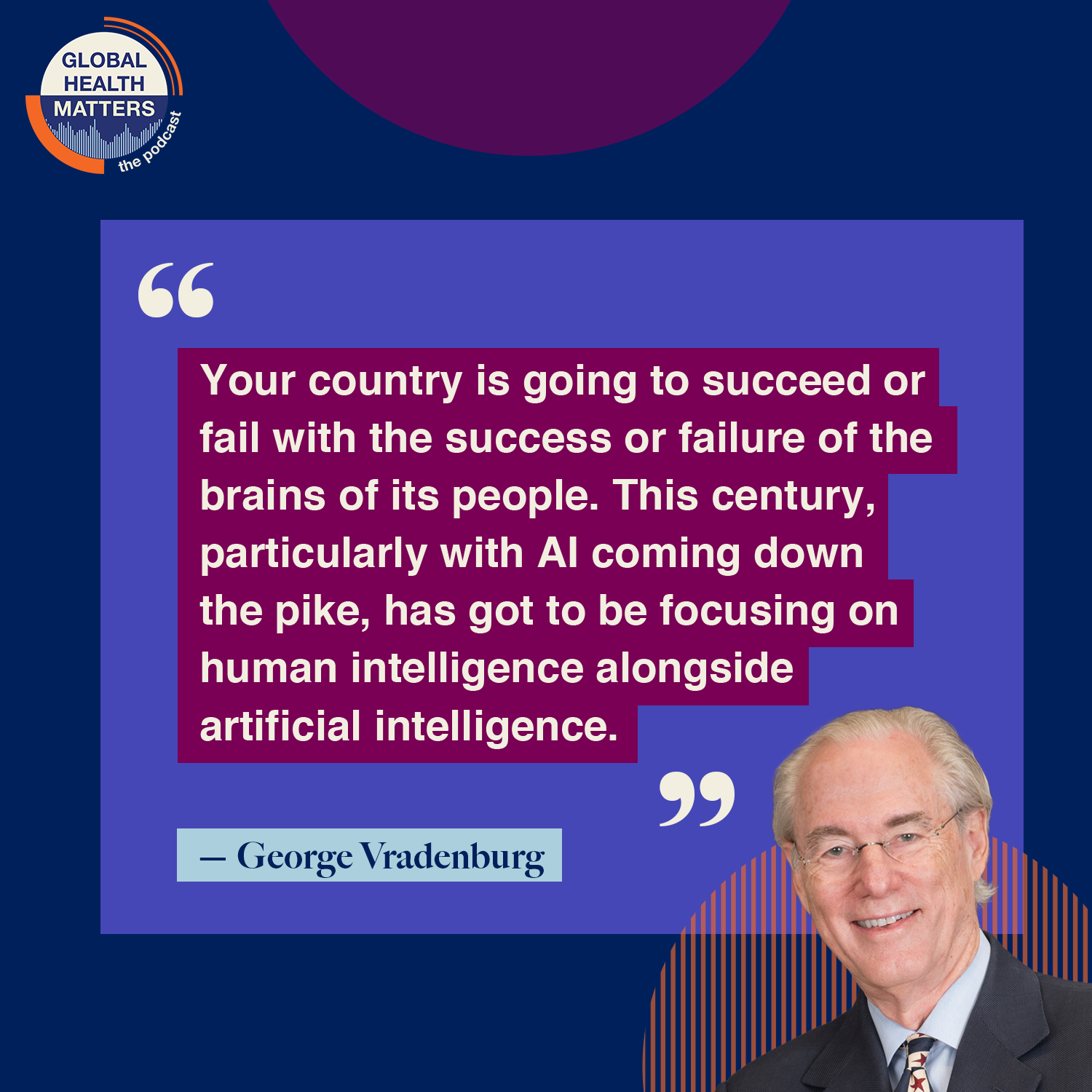
This podcast promotion is sponsored by the Global Health Matters podcast.
If you wish to promote relevant information for readers of Geneva Health Files, for a modest fee, get in touch with us at patnaik.reporting@gmail.com.
Great that you love our work. However, forwarding exclusive editions hurt us and directly undercuts our work. Please ask your friends and colleagues to become subscribers. It helps us show up when the going gets tough. Thank you for understanding.
Also from us:
 Priti Patnaik
 Priti Patnaik
 Priti Patnaik
 Priti Patnaik
Global health is everybody’s business. Help us probe the dynamics where science and politics interface with interests. Support investigative global health journalism.

![Developing Countries Get More Time to Negotiate Language on Technology Transfer To Fight Anti-Microbial Resistance [WHO EB158 UPDATE]](/content/images/size/w960/format/webp/substack-post-media-s3-amazonaws-com/public/images/619783d3-b5b5-4cc1-8707-703eded46016_7957x5968.jpg)
![Countries Bat for Multilateralism at World Health Organization, Minus the U.S. [EB158 Update]](/content/images/size/w960/format/webp/substack-post-media-s3-amazonaws-com/public/images/b5c23eaa-d614-4d78-ab69-023f4f02f1e0_4358x3163.jpg)

