![Countries Bat for Multilateralism at World Health Organization, Minus the U.S. [EB158 Update]](/content/images/size/w1280/format/webp/substack-post-media-s3-amazonaws-com/public/images/b5c23eaa-d614-4d78-ab69-023f4f02f1e0_4358x3163.jpg)
Hi,
When Ugandan-Indian origin, American national, Zohran Mamdani staked claim to victory on being elected the mayor of New York City in November 2025 (a metropolis city of 8 million plus people, nearly comparable to the population of Switzerland), he had a message for U.S. President Donald Trump: “….since I know you’re watching, I have four words for you: turn the volume up.”
It appeared WHO member states struck a similar note this week at the opening of the 158th Executive Board meeting of the organization.
In this edition, we present a quick overview on what countries said and what to expect in the coming days this week as the EB gets underway in Geneva this week.
We are onsite and tracking both informal and formal proceedings, and also getting a flavor of the buzz around town. We present the GHF View at the conclusion of the story.
Geneva Health Files strives to offer value to our readers who work in global health. But it is hard to do this without institutional support, so we rely on our news they can use.
Support public interest global health journalism, become a paying subscriber. Tracking global health policy-making in Geneva is tough and expensive. Help us raise important questions, and in keeping an ear to the ground. makes this possible.
Gratitude to our subscribers who help us contribute to greater accountability in global health.
Watch out for more updates from us.
Best,
Priti
Feel free to write to us: genevahealthfiles@gmail.com; Find us on BlueSky: https://bsky.app/profile/genevahealthfiles.bsky.social

I. UPDATE EB158
Countries Bat for Multilateralism at World Health Organization, Minus the U.S.
Member states of the World Health Organization vowed protect multilateralism, days after the unequivocal withdrawal of the United States from the institution. At the opening of the 158th meeting of the WHO Executive Board Meeting, countries acknowledged the strain the WHO has faced on account of financial pressures, and contended with the changed realities in geopolitics that has deeply affected global health.
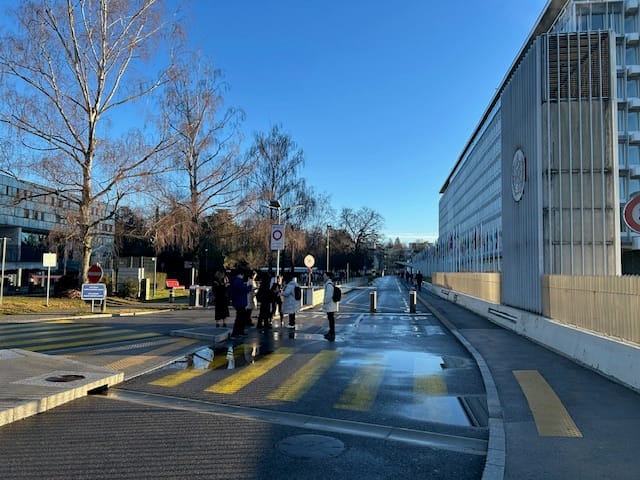
Sun streamed into the WHO premises, bringing optimism to the start of the week’s proceedings. Later though, the sky was overcast. Inside, the calls for solidarity were tempered with realism.
The cash crunch is only one of the challenges WHO faces. This week, countries are considering more than 30 items on the agenda, including the matter of the U.S. withdrawal from the WHO, that is scheduled to be discussed later in the week, apart from governance issues such as the role of the institution in the evolving global health architecture.
The EB meeting began in the shadow of somewhat difficult deliberations, according to diplomatic sources, at the Programme Budget and Administration Committee of the Board that took place last week during January 28th-31st. The PBAC proceedings are closed door, and have a subset of members of the EB. (The EB is a 34-member body.) This week, the EB is being chaired by Blair Comley, Secretary, Department of Health, Disability and Ageing, Australia.
In this report, we discuss the statements made by WHO leadership and analyse what countries said. We discuss the report of the PBAC submitted to the EB on February 2, 2026, that barely captures the depth of the deliberations. We also alert you on potentially contentious matters that will come up in the course of this week, more on this below.

SPEECH BY WHO DG
In what some perceived as a fluent and confident speech by Tedros Adhanom Ghebreyesus, at the opening of the meeting, the DG said, “2025 was a year of stark contrasts”. He recounted that successes at the multilateral level including the adoption of the Pandemic Agreement, coincided with the “undeniably one of the most difficult years in our Organization’s history”. (There was no mention of the United States in his speech.)
On the path forward on governance and financing, he put the ball in the court of the member states: “This is your WHO. Its strength is your unity. Its future is your choice.”
As per practice in governing bodies’ meetings, he touched on an array of matters that WHO worked on, including efforts to raise real prices of tobacco, alcohol, and sugary drinks by at least 50% by 2035; acknowledged the shortage of 11 million health workers by 2030, and support provided to countries facing the most acute shortages by helping strengthen their national workforce strategies.
He discussed the continued barriers to Universal Health Coverage (4.6 billion people lack access to essential health services, 2.1 billion face financial hardship due to health-related costs) and the establishment of UHC Knowledge Hub in Tokyo.
He said that WHO developed guidance on responding to the health financing emergency, supporting countries including Cambodia, Ethiopia, Mozambique and Uganda.
He also mentioned the WHO prequalification of Lenacapavir, a long-acting injectable that prevents almost all HIV infections; and new guidelines for using GLP-1s to treat obesity.
He acknowledged various countries reaching milestones on disease elimination.
In an update on emergency preparedness and response he said, “The WHO Hub for Pandemic and Epidemic Intelligence launched an update of the Epidemic Intelligence from Open Sources system – EIOS – which harnesses the power of AI to support more than 110 countries and 30 organizations, who use the platform every day to quickly identify new threats…Through the International Pathogen Surveillance Network, over 110 countries are also strengthening genomic surveillance to better track pathogens, detect new variants, and guide faster responses to emerging threats.”
Excerpts of his speech on the reforms discussion and on WHO’s independence:
“…When I say independence, I don’t mean independence from Member States, of course. WHO belongs to you, and always will. I mean non-dependence on a handful of donors; I mean non-dependence on inflexible, unpredictable funding; I mean a WHO that that is no longer a contractor to the biggest donors; I mean an impartial, science-based organization that is free to say what the evidence says, without fear or favour.
Although we have faced a significant crisis in the past year, we have also viewed it as an opportunity. It’s an opportunity for a leaner WHO to become more focused on its core mission and mandate, including in the context of the UN80 reform initiative. This means sharpening our focus on our core mandate and comparative advantage, doing what we do best – supporting countries through our normative and technical work – and leaving to others what they do best.
WHO can’t do everything, and we shouldn’t try. WHO’s superpower is its convening power – the ability to bring together governments, experts, institutions, partners, civil society and the private sector under one umbrella.
Our success – and yours – lies in harnessing that power, including through our network of more than 800 collaborating centres – a powerful resource for strengthening our normative work and ensuring that evidence drives policy. After all, the needs of the countries we serve are always evolving, so WHO must also continue to evolve. That means that the governance of WHO must evolve.
If we want an agile, efficient and effective Secretariat, we need agile, efficient and effective governance. I hope you will support the Chair in the governance reform he proposed.
If we want a Secretariat that can deliver on Member State priorities, we need Member States to prioritize, and to resource those priorities. This is your WHO – it is what you want it to be, and what you make it. And as WHO evolves, so must the global health architecture – or as I prefer to say, the global health ecosystem.
There are now many discussions on reforming that ecosystem to ensure all partners leverage their comparative advantage, avoid overlaps and duplication, and that together we deliver value and results for the countries we serve. We are proposing to bring those discussions together into a joint process to help transition to a leaner, more collaborative and impactful global health ecosystem, in support of country priorities. We look forward to your advice and guidance on that and the other agenda items before you this week.
….We can see the difficulties of the past year as a setback, or we can choose to see them as the catalyst for the future of WHO. The path forward is clear. It is the path we have already charted; it is the foundation we have already laid in the Transformation and the realignment: To secure our financial stability and sustainability; To strengthen our normative and technical leadership;
To reform our governance; To reshape the global health ecosystem; To leverage our collective strengths; To reinforce our solidarity; And to do it all in service of country-led priorities – your priorities.
That’s why you founded WHO in the first place – to create a place where the nations of the world work together to find shared solutions to shared threats. That’s why you adopted the Pandemic Agreement last year; And that’s why you are now negotiating the PABS Annex, and I am confident that you will conclude your negotiations in time for this year’s World Health Assembly. The story of 2025 is not one of austerity but resolve. It is the story of the people of this Organization serving the people of this world. They are the reason WHO is here, and the reason we will continue to be here. This is your WHO. Its strength is your unity. Its future is your choice.”
WHAT COUNTRIES SAID
In their statements, a range of countries spoke evocatively on the importance of multilateralism. Multilateralism was described as “not optional” but essential, as no single nation can address global threats like pandemics or antimicrobial resistance (AMR) alone, some countries said.
Nepal speaking on behalf of Southeast Asia region, said, “… we meet at a moment when the Global Health architecture is under stress and multilateralism itself is being tested”
Poland, said, “…Multilateralism is not optional. It is essential. We have also witnessed the resurgence of vaccine preventable diseases, declining immunization coverage driven by misinformation, conflicts and weakened primary health care systems has reversed years of hard-won progress. This is not merely a technical failure. It is a failure of equity, access and global solidarity. We must renew commitments to strengthen primary healthcare, extend disease surveillance and invest in prevention..”
In its statement, France said: “ … All of this work is taking place in a more difficult international environment where global health is challenged. One thing is clear, the response cannot be piecemeal, nor can it involve competition. WHO is and must remain the central pillar of the Global Health architecture. Its constitutional mandate is a normative one based on universality and independence, and that more than ever it must be preserved to take this response ….major political responsibility, the conclusion of international agreement on pandemics. What is at stake is our collective capacity to reform the system. France fully supports who’s proposal to host a joint process to strengthen coherence and coordination.”
Member states emphasized that adequate, sustainable, and predictable funding is essential to preserve the WHO’s independence and its ability to respond to health emergencies.
For some, the current financial crisis is viewed as an opportunity to build a “leaner” WHO that focuses on its core normative and technical functions. (Not all countries agree to this, and want WHO to have a central and wider role.) Thailand and other delegations emphasized that global policies must translate into tangible outcomes through strong country offices, where the impact is most visible.
In an opening statement, Norway said, “…We have the mandate to address long standing challenges through reform of the Global Health architecture and the UN 80 initiative. Norway wants WHO to lead with ambition, efficiency and courage.”
There is an overall consensus on the need for internal governance reforms to make the organization more accountable, inclusive, and agile to deliver on its constitutional mandate.
In a statement, Switzerland said, “…we commend the fact that the Secretariat has indicated for the first time that some stages in implementation could be deferred. It is vital that we have transparency as to what is feasible and achievable in order to allow us to take realistic and enlightened decisions. Secondly, in order for the EB to fully play its governance role, we strongly encourage the Secretariat to formulate more specific questions with specific options. Switzerland is convinced that this session will be an important step as we work towards strengthening our organization. WHO is guided by its member states. We must give guidance, but we must also accept that it’s not possible to follow implementation of our recommendations on a day-to-day basis. Let us then give the Secretariat our trust and the space it needs to do its work and to come back with results that can be presented at the WHA in May…”
Several states urged the timely finalization of the pandemic agreement and its annexes to bolster collective readiness and move toward implementation.
Tanzania said, “we commend the Director General for his exemplary leadership, particularly in steering WHO, repositioning and realignment agenda in the context of financial resources, geopolitical tension and humanitarian crisis, which have resulted in health emergencies. Tanzania underscores that multilateralism is not a choice but a necessity, as no country is safe until all countries are safe, and global health challenges can only be addressed through collective action and solidarity. We commend WHO’s indispensable role in strengthening health systems, responding to outbreaks such as cholera, advancing maternal and child health and supporting critical processes, including joint external evaluation, universal health preparedness review and implementation of the International Health Regulations. In this context, we stress the urgency of concluding the intergovernmental working group process to finalize the PABS annex and to bring the pandemic agreement into force..”
Strong condemnations were issued regarding attacks on health facilities and workers in conflict zones like Ukraine and Gaza, with calls to uphold international humanitarian law.
Ongoing wars, specifically Russia’s invasion of Ukraine and Israel’s use of force in the Palestinian territories, continue to place unprecedented pressure on health systems and the safety of humanitarian personnel, countries said. Some member states, including Israel and the Russian Federation, expressed concern regarding the politicization of the WHO, calling for more transparency and impartiality.
The impact of climate-related health emergencies was a key theme, particularly for small island states and African countries facing extreme environmental events. Countries said that building resilient health systems anchored in primary healthcare is considered the most effective pathway for exiting health crises and achieving universal health coverage.
Member states highlighted the growing burden of non-communicable diseases (NCDs) and mental health issues, advocating for their inclusion in resilient health system building. Belgium and Slovenia called for the WHO to prioritize guidance on harmful products like alcohol and unhealthy nutrition, which are driven by commercial interests.
WHAT TO LOOK OUT FOR:
WHO finds itself in a perfect storm, caught between the financial crunch and a difficult geopolitical reality that seeps into global health. In addition, there are other layers of complexity that it must navigate: including cultural wars among its member states.
A precursor of what might come this week, already surfaced at the PBAC deliberations last week. Some member states have sought informal consultations this week, on WHO’s engagement with non-state actors, that observers say concerns the sexual and reproductive health agenda at WHO. Depending on how this evolves, it could likely suck up oxygen during this week. (We are following up on this developing story.)
(The past could be an indicator, see from us: Regressive Politics on Climate & Gender, Crash Against WHO’s Gates, Impinging on Global Health Policy Space; and Countries Voted Eight Times in a Politicized World Health Assembly Revealing Geopolitical Fissures)
In addition, the EB will also consider the withdrawal of the U.S., and of Argentina. (See WHO report to the EB on this.)
PBAC REPORT
Key takeaways and excerpts:
On the report of Independent Expert Oversight Advisory Committee (OAC):
· PBAC urged the Secretariat to fill key vacancies in accountability and oversight. “In response, the Secretariat reiterated its commitment to those functions, explaining that actions had already been taken, starting with the recently advertised position of Director of the Office of Internal Oversight Services. It further reassured the Member States that funding for accountability and oversight functions had been preserved despite the current financial situation.”
· “The Committee stressed the importance of ensuring alignment between funding and programmatic priorities, and emphasized the need for predictable and flexible financing, including through increased assessed contributions, as a way to address misalignment among programmatic areas and across major offices.”
On financing:
· “The Secretariat also provided an update on the financing outlook for 2026–2027, including trends in voluntary contributions, indicating that funding had been pledged to cover approximately 85% of the Programme budget 2026–2027. It was explained that while the funding gap amounted to about 15% of the approved Programme budget (or US$ 660 million), the gap was smaller than in the previous biennium. That gap, however, would be more difficult to close given the global economic trends.”
· PBAC “remained concerned about persistent financing imbalances and pockets of poverty, particularly at the regional and country levels, and emphasized the need to align funding with agreed priorities and country needs. In addition, the Committee requested that country-level functions, particularly in vulnerable settings, be protected during the realignment and in the implementation of cost-containment measures, and further called for WHO’s normative and emergency preparedness capacities at the country level to be safeguarded.”
On the reforms in the global health architecture:
“The Committee expressed strong support for the proposal, recommending a joint, inclusive, transparent, timebound, resource effective and efficient process, hosted by WHO, which is led by Member States, and aligned to national priorities. The Secretariat reassured the Committee that WHO’s controls, including the Framework of Engagement with Non-State Actors, would apply as needed. The Director-General stressed that the global health architecture had delivered in the past, but as the global health landscape continued to evolve, an updated discussion was warranted. The WHO prioritization process constituted an opportunity for the Organization to work with other agencies to identify areas in which they had a comparative advantage and to shift activities to others when such functions did not align with WHO’s core mandate. WHO was the natural host for a joint process given WHO’s constitutionally mandated role as a convenor, near universal membership and presence in over 150 countries, which allowed for country-level delivery.
The Committee recommended that the Executive Board note the report and adopt the following draft decision:
The Executive Board, having considered the report by the Director-General and recognizing the central role of Member States in the reform process, mindful of the ongoing work of the United Nations General Assembly’s informal ad-hoc working EB158/4 group on the UN80 Initiative and the call for substantive proposals on structural changes and programme realignments from specialized agencies,
Decided to request the Director-General, in close consultation with, and under the direction of, Member States, and in a transparent and inclusive manner, to:
(1) design a proposal on a joint, inclusive, transparent, timebound, resource effective and efficient process, hosted by WHO, which is led by Member States, that brings together and complements current global health architecture and UN80 discussions to facilitate convergence and consensus-building, in order to support the transformation of the current global health architecture, enhance coordination, and leverage the comparative advantages of diverse actors, while being responsive to country needs and realities;
(2) convene relevant global health actors, including other global health entities, regional organizations, development banks, philanthropies, civil society and academic institutions, in line with the Framework of Engagement with Non-State Actors, as applicable, in the design of the proposal, taking into account ongoing global health reform initiatives; and
(3) submit the proposal on the joint process for the consideration of the Seventy-ninth World Health Assembly, through the forty-fourth meeting of the Programme, Budget and Administration Committee.”
GHF VIEW:
Despite the optimistic speech by the DG, the constraints on WHO are real.
From cutting down staff; to dealing with pockets of poverty as a result of earmarked funding; to increasingly working with large private foundations; from rationalising operations in emergency settings; fighting for a seat at the table in the reforms discussions; the challenges the institution faces are stark. Much will depend on whether, and how member states will steer the institution out of turbulent waters.
At the cusp of transition in the leadership, (DG Tedros finishes his term in 2027), the withdrawal of the U.S. continues to leave behind a space that it yet to be occupied, some observers are of the view. Subsequent months will reveal, not only who will come around to lead WHO, but which countries will step up more either with funding or ambition. The lack of both of these, will be instrumental in shaping what WHO will become in the post-U.S. era at the institution.
Disclosure: We used AI tools for text analysis of statements made by countries.
Great that you love our work. However, forwarding exclusive editions hurt us and directly undercuts our work. Please ask your friends and colleagues to become subscribers. It helps us show up when the going gets tough. Thank you for understanding.
Also from us:
 Priti Patnaik
 Priti Patnaik
 Priti Patnaik
Global health is everybody’s business. Help us probe the dynamics where science and politics interface with interests. Support investigative global health journalism.

![Developing Countries Get More Time to Negotiate Language on Technology Transfer To Fight Anti-Microbial Resistance [WHO EB158 UPDATE]](/content/images/size/w960/format/webp/substack-post-media-s3-amazonaws-com/public/images/619783d3-b5b5-4cc1-8707-703eded46016_7957x5968.jpg)
![[GUEST ESSAY] When Alcohol Disappears From Accountability on Non-Communicable Diseases, Prevention Loses [EB158 WHO]](/content/images/size/w960/format/webp/substack-post-media-s3-amazonaws-com/public/images/76e70ede-eb1b-4162-bc23-c9048136a26f_3840x2160.jpg)

